
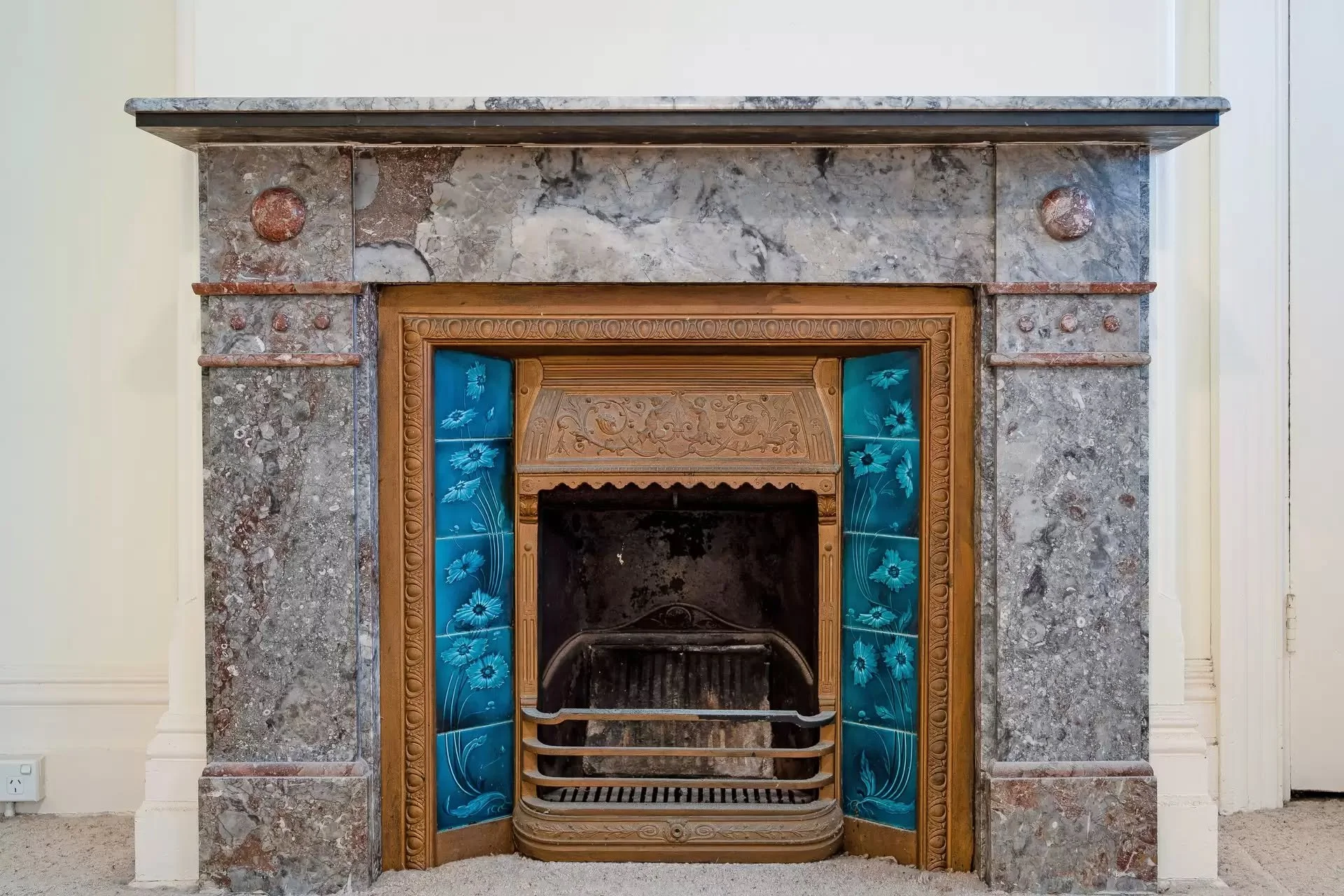
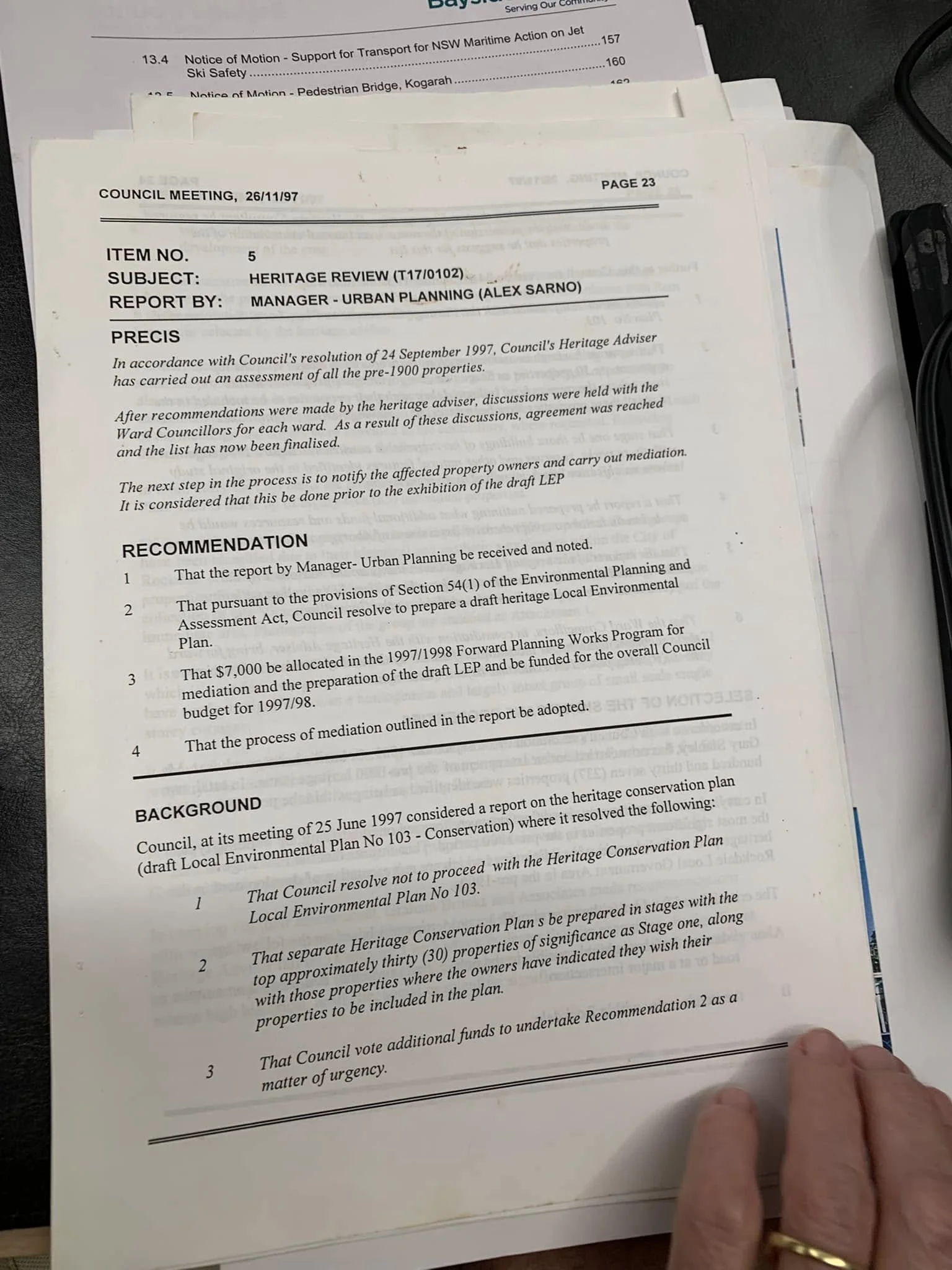
Heritage protection
Protecting heritage is about valuing where we’ve come from while shaping a future that is liveable, inclusive, and grounded in place.
Heritage protection is not about stopping development. It’s about smart planning, fairness, and certainty. When councils act early to identify and protect places of cultural and historical significance, everyone benefits — residents, buyers, and developers alike. Too often, heritage is left unaddressed until the last possible moment. That’s when communities are forced into high-stakes, divisive debates and when uncertainty is greatest. Interim heritage protections exist to prevent irreversible loss while evidence is properly assessed. They are a planning safeguard — not a punishment.
Peaceful Bayside believes we can deliver more homes, including affordable housing, while also protecting the character, stories, and neighbourhoods that make Bayside unique. These goals are not in conflict. They are the foundation of good local government.
Community education
Bayside has a rich history and a complex framework for protecting individual buildings of heritage significance. There are also procedures in place to recognise and protect Heritage Conservation Areas and other assets.
The various ‘types’ of listings differ greatly, and there are many myths and misconceptions about their impact on homeowners. Council offers grants to owners of heritage-listed homes.
We advocate for Council to regularly educate the community about these grants and heritage topics, such as describing the ‘types’ of heritage listing (especially prior to any new HCAs being proposed), showing examples of adaptive reuse and best practise restoration, and more-generally educating new and CALD residents about the rich European and First Nations history of the Bayside LGA and how the architectural style has evolved over the years.
Protecting our Heritage while building Bayside’s future
-
Heritage protection recognises buildings, streetscapes, and places that tell the story of our community. It ensures that historically or culturally significant places are carefully assessed and considered before irreversible changes are made.
-
A Heritage Conservation Area (HCA) is a suburb, streetscape, or precinct recognised for its historical or aesthetic character. HCAs protect cohesive groups of buildings, landscapes, and streetscapes from inappropriate development that changes the overall character of the area.
HCAs are not just single buildings; they protect the "collective" significance, including the relationships between houses, fences, trees, and gardens. They are designed to ensure that new development does not destroy the unique, cohesive character that defines a neighbourhood, preserving it for future generations.
HCAs maintain historic character while still allowing growth. HCAs could be applied to whole streets or could be applied to a row of properties. It is simpler to implement HCAs than to impose Heritage Listing to individual properties.
-
Yes. HCAs can still be appropriate even where some out-of-character development has occurred. Heritage planning typically assesses the overall character and significance of a precinct, rather than requiring every property to be intact. Many historic areas contain a mix of contributory buildings, altered buildings and more recent development, yet still retain a recognisable streetscape pattern, scale, subdivision layout, and architectural rhythm that reflects their historic origins.
Planning frameworks commonly address this by identifying “contributory” and “non-contributory” buildings within an HCA. Contributory buildings are generally protected from demolition and unsympathetic alteration, while non-contributory sites may allow more flexibility for redevelopment or infill.
In practice, HCAs are often introduced after some change has already occurred, specifically to prevent further erosion of the remaining character. Even where several buildings are out of character, an HCA can still guide future development so that new work responds better to the historic streetscape and the area’s underlying heritage values.
An example of this is the HCA which is Brighton Parade, Brighton-Le-Sands. Overall the streetscape is visually intact. However there is a double storey rendered house built in the late 1980s, which is included in the HCA but is classified as “uncharacteristic”. Another house, a 1970’s single storey brick cottage, is less intrusive so is classified as “neutral”.
-
HCAs and individual heritage listings operate differently in both purpose and regulatory impact.
An individual heritage listing applies to a specific property assessed as having identified heritage significance. Controls are typically stricter and more targeted: demolition is usually prohibited or heavily restricted, and alterations, additions and sometimes internal works require detailed heritage assessment and development consent. The regulatory burden (which falls on the property owner) is concentrated on that one property, while neighbouring sites are unaffected.
With a HCA, controls generally focus on external changes visible from the public domain, including demolition, new development, alterations, subdivision patterns, height, setbacks and materials, to ensure the overall streetscape is retained. Compared to an individual listing, controls at the single-building level are usually less intensive.
Councils can adjust planning controls within a HCA through amendments to their LEP, subject to statutory processes and state heritage legislation. This can include facilitating outcomes such as subdivision or increased density, provided the heritage objectives are maintained. For example, redevelopment behind retained façades may be supported where streetscape character is conserved.
-
Fear of value loss is a common concern raised by residents, but evidence does not support widespread value decline and is more likely to enhance prices.
Properties located within well-managed Heritage Conservation Areas often maintain or increase their value because the character of the neighbourhood is protected from inappropriate development. This protection helps preserve attractive, cohesive streetscapes and provides greater certainty for buyers that neighbouring properties are unlikely to be replaced by incompatible buildings that could diminish the overall character of the area.
Studies of Australian suburbs, such as Sydney’s Ku-ring-gai area, found that heritage-listed properties often command a price premium compared with similar unlisted homes.
Reviews of heritage precincts across multiple Australian cities concluded that heritage designation has little to no negative impact on residential property values, and that protected streetscapes and character are often cited as attractive features by buyers.
-
There is a common perception that living within a HCA places significant restrictions on homeowners. In reality, the controls are generally more limited than many people assume. Being located within a HCA does not mean that owners are required to restore their home to an earlier historical appearance, nor does it usually involve regulation of interior spaces. Internal renovations, modernisation of kitchens and bathrooms, and other changes within the house are typically outside the scope of heritage controls.
Similarly, routine maintenance and repairs such as painting, roof repairs, or replacing worn materials like-for-like generally do not require special approval beyond normal planning requirements. Living in a HCA also does not prevent development altogether.
Homeowners can still undertake extensions, additions, alterations, and in some cases subdivision or new development, provided the proposal is designed to respect the character of the surrounding streetscape.
The aim is not to freeze neighbourhoods in time, but to guide new development so that it complements the existing character of the area and preserves the qualities that make the neighbourhood distinctive.
-
No. Heritage protection and new housing regularly coexist. Thoughtful design and adaptive reuse can deliver new homes while retaining character and sense of place.
Heritage conservation areas do not prohibit subdivision or infill and renovations are permitted, particularly at the rear or internally, provided the streetscape character is respected. Many properties in areas with a high number of Heritage Conservation Areas have undergone significant contemporary renovation. These projects often combine the retention of the original street façade with modern architecture at the rear, allowing homes to meet contemporary living standards while preserving the historic character of the neighbourhood.
-
Once a heritage place is demolished, it is gone forever. Inaction allows irreversible decisions to be made before proper assessment and community input.
-
Residents have consistently asked for stronger, clearer heritage protections and transparent decision-making that puts the public interest ahead of developers.
-
Many neighbourhoods lose their character gradually through incremental demolition and redevelopment. Bayside is currently experiencing unprecedented development, which is expected to accelerate under state government housing and planning strategies. Without proactive measures, the suburb’s distinctive character could be lost before we have a chance to manage it.
Compared with suburbs of similar age and demographics, Bayside has relatively few Heritage Conservation Areas. This gap leaves the LGA vulnerable to unsympathetic or out-of-character development that could erode the qualities that make our streetscapes unique.
-
Bayside Council offers Local Heritage Grants of up to $3,000 (at the time of writing) to property owners who have recently completed eligible conservation work on a heritage‑listed building. The grants are paid in arrears once evidence of the work is provided. Eligible works include sympathetic repairs and restoration such as tuck‑pointing, external painting in traditional heritage colours, reconstruction of original elements (e.g., windows, verandahs and fences), and other conservation‑focused projects that help retain the item’s heritage character.
-
We are continually advocating to improve heritage protections in Bayside; some achievements include:
Heritage Review and Local Character Assessment: Scoping/feasibility report for Heritage Review (preliminary investigation of significant heritage sites, structures, precincts across Bayside), Local Character Assessment (scoping assessment of character traits across Bayside suburbs), and liaise with Botany Historical Trust and St George Historical Society – Bredehoeft & Douglas motion (March 2025)
Bexley Heritage Survey: To refer back to committee for further discussion with additional information Botany Historical Trust – regular meetings and program activities, including Ron Rathbone Competition review, Dr Peter Orlovich Honors (BHT initiative to display photo with information about his legacy at Mascot Library) – Douglas & Bredehoeft motion (March 2025)
116 Villiers Street: We advocated for the IHO status prior to the sale of the house, Council later determined that the property warranted heritage protections and that they should purchase it and use it as a demonstration of best practise adaptive reuse and restoration.
10.7 Certificates: During the debate over the IHO it came to light that 10.7 certificates (documentation that a buyer requeste from council to determine the status and context of the property) could be better utlised to ‘warn’ buyers that houses in some areas of the LGA may have heritage significance and that Council is currently reviewing their heritage strategy. We put a motion to request additional information on the 10.7 certificates, particularly flagging houses in areas that were recommended by heritage specialists in years past to be potential HCAs.
We are constantly advocating for a robust Heritage Strategy and a comprehensive review of past HCA recommendations. This strategy and HCA review process will hopefully result in increased protections and help safeguard urban character and heritage precincts for years to come.
Did you know?
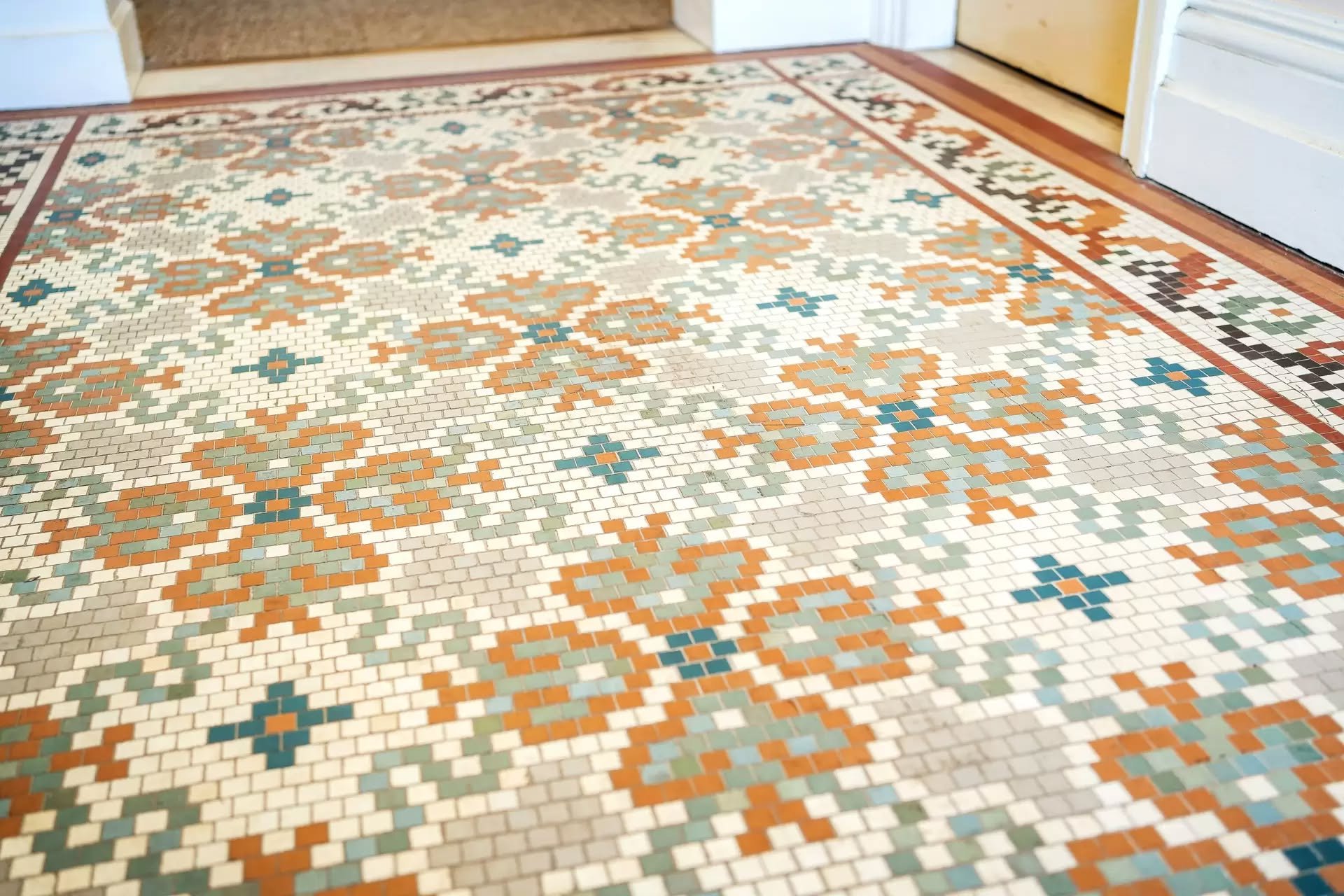
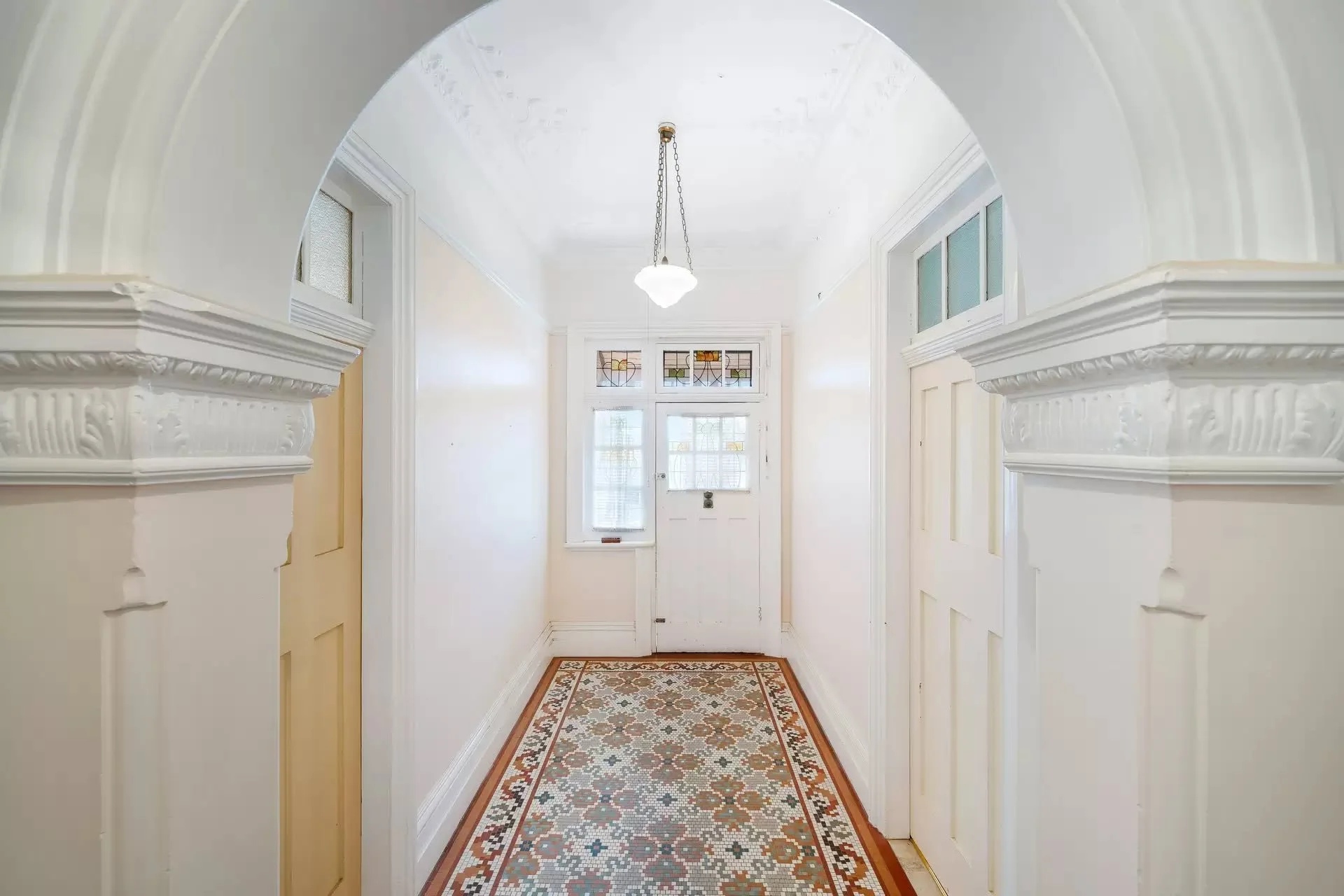
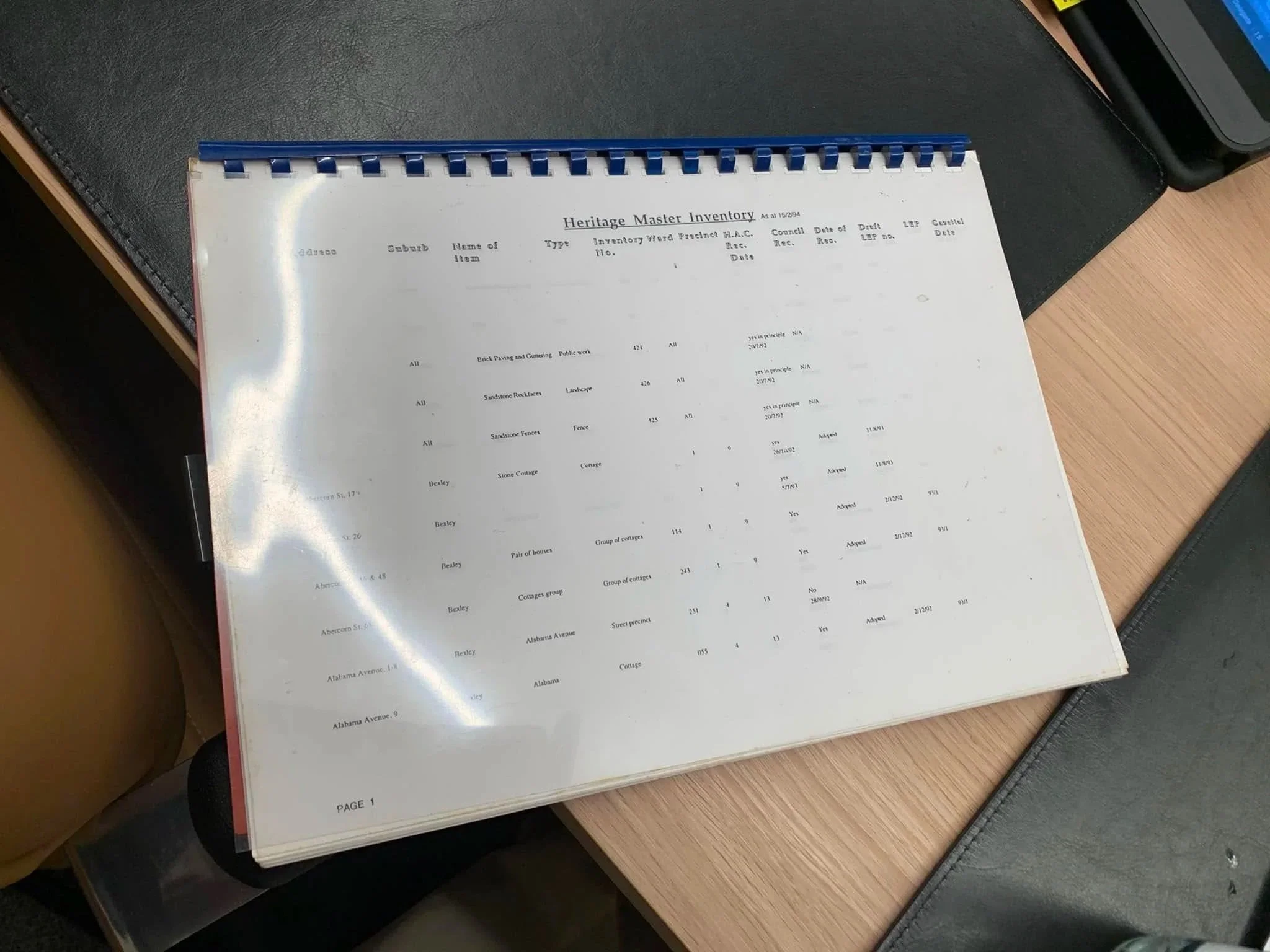
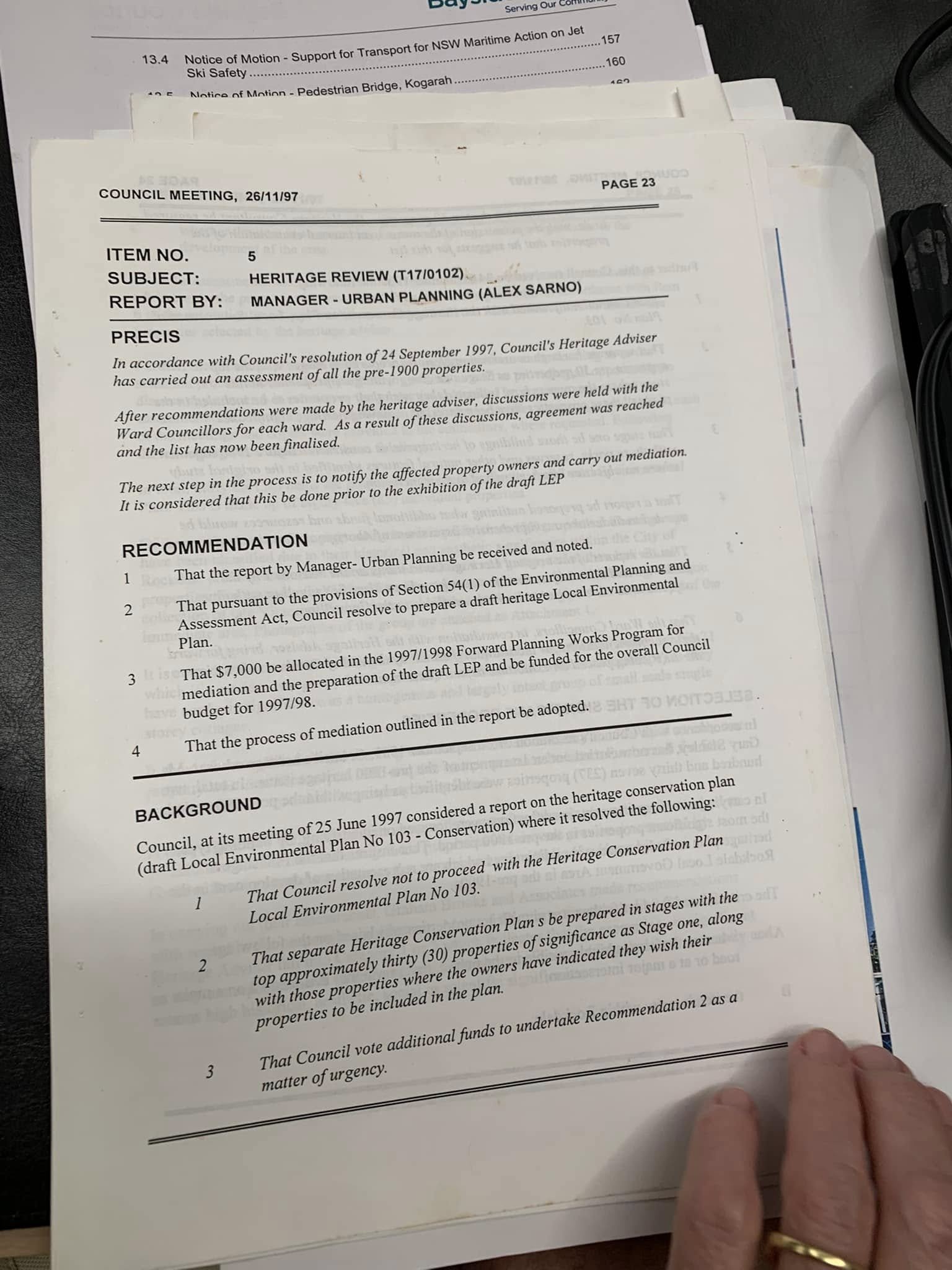
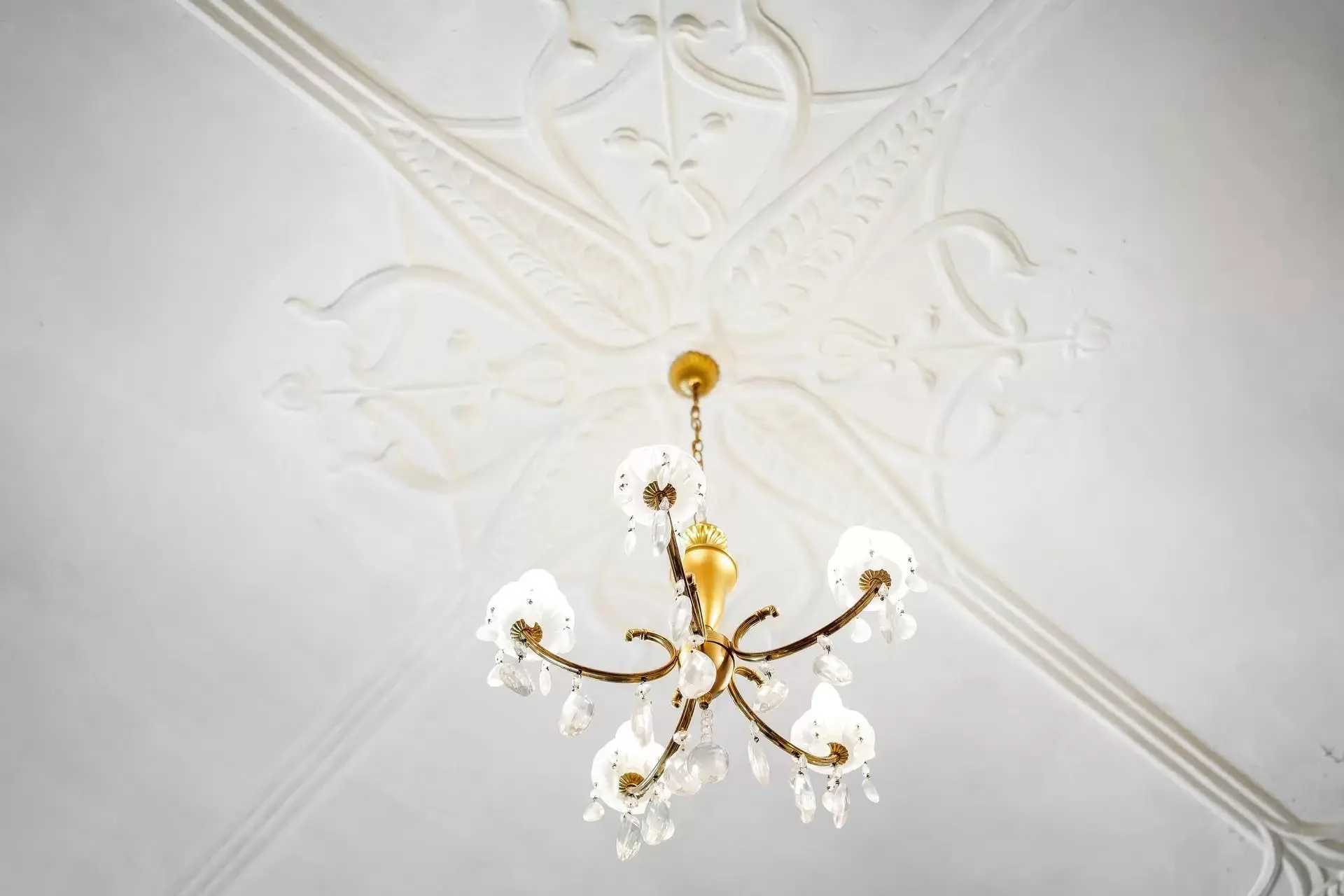
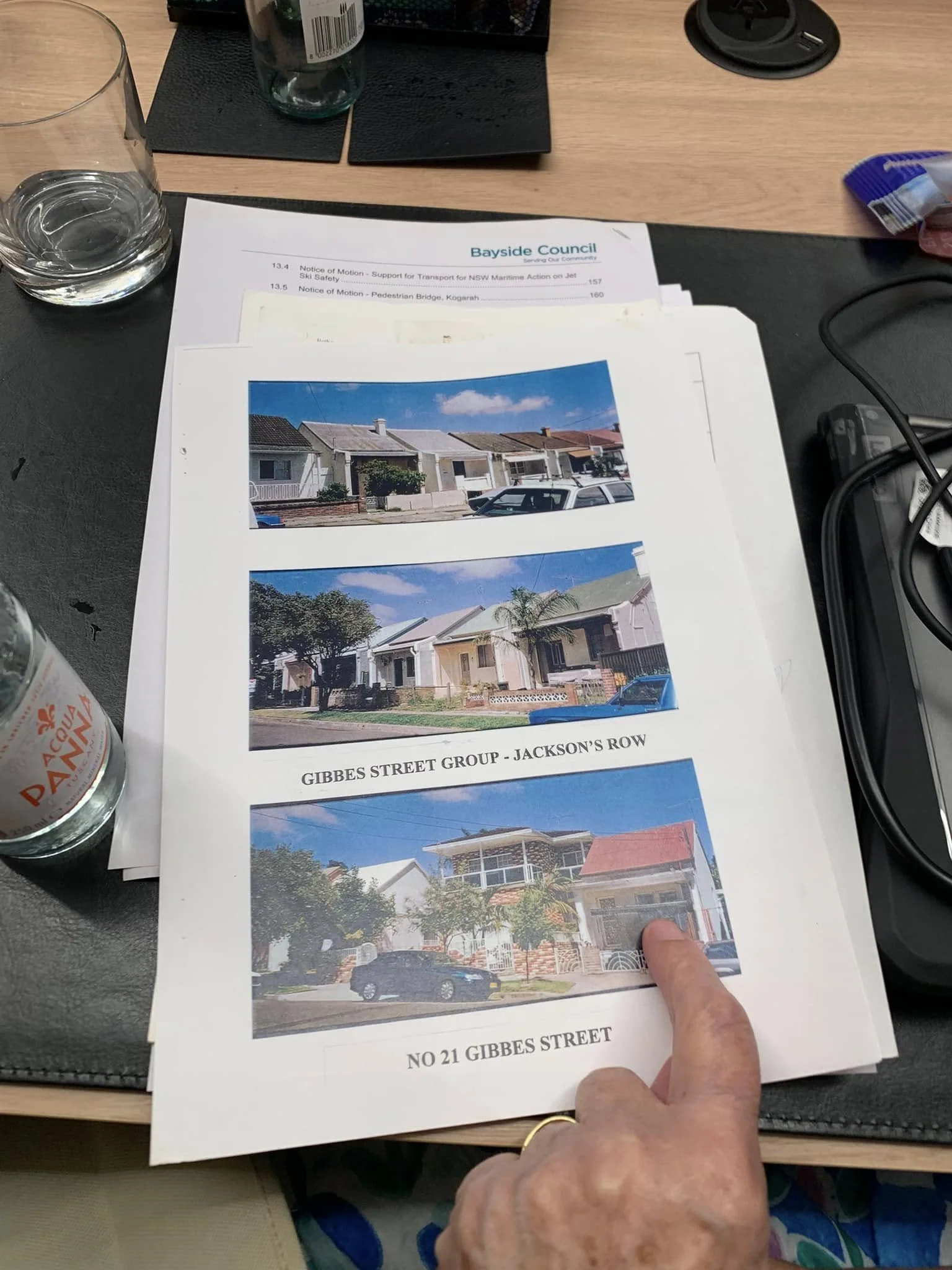
Some suburbs in our LGA have no heritage homes on the list
Years of delayed heritage protections have resulted in some suburbs having fewer than three heritage residential homes listed on the Bayside Local Environmental Plan 2021. That is not because there are none, it is because they have not been assessed OR heritage listing recommendations have been shelved by previous terms of Council.
A little ‘people power’ can make a BIG difference.
-
![Volunteer]()
Volunteer
Peaceful Bayside is powered by people like you. We’re a community of caring, fun, creative locals and when you volunteer with us, you’ll make a real difference right where you live. Whether you have a little time or a lot, there’s a place for you in our team — so please volunteer and help us build a better Bayside, together.
-
![Join the Party]()
Join the Party
If you want safer streets, greener parks, more liveable neighbourhoods, and a thriving local arts and culture scene — then join our party! It’s free, it keeps local democracy strong, and keeps the major parties more accountable. Becoming a member gives you a real voice on Council and the power to shape our community. Don’t get angry — get elected!
-
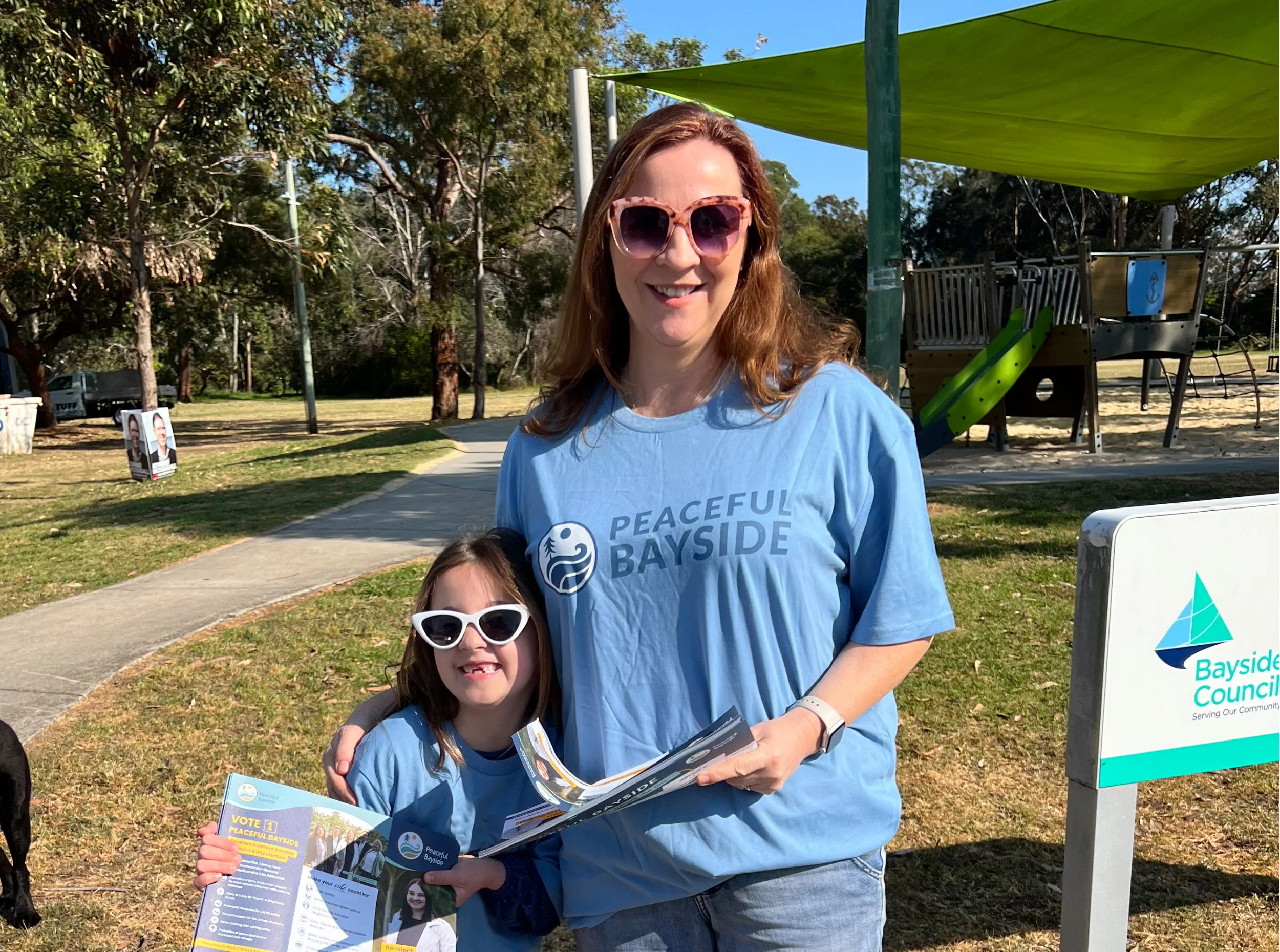
![Group of eight people standing outdoors with a dog, some wearing matching blue shirts, in a park-like setting with trees and grass.]()
Donate
Every dollar you give helps keep our community movement strong and independent. Your support powers all our local campaigns, keeps Peaceful Bayside representatives on Council, helps us stay connected through our website, newsletters, and events — all run on the dedication of volunteers and the smell of an oily rag.
-
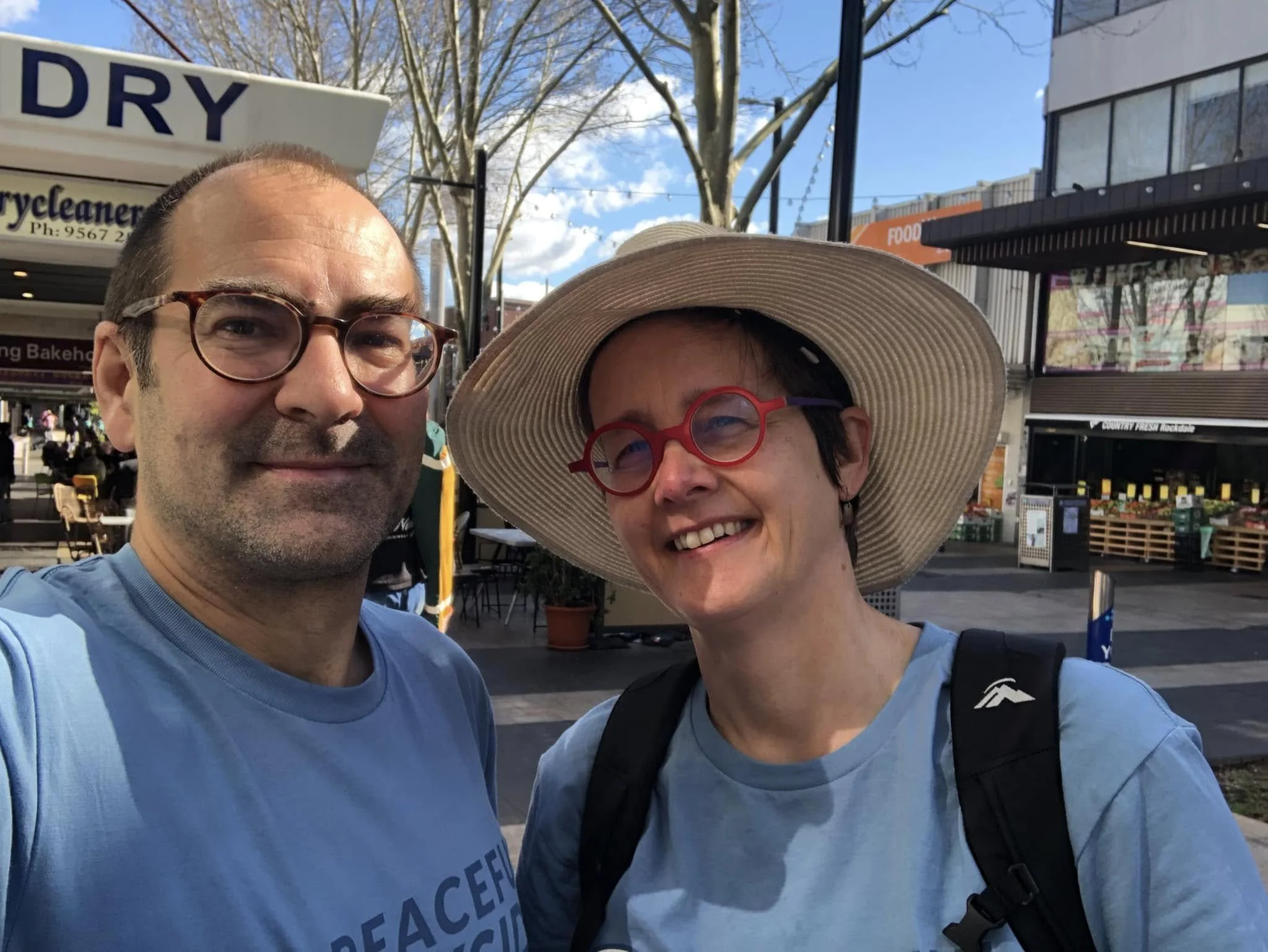
![Two smiling individuals wearing blue shirts and glasses taking a selfie outdoors on a sunny day, with a street scene and storefronts in the background.]()
Follow us on socials
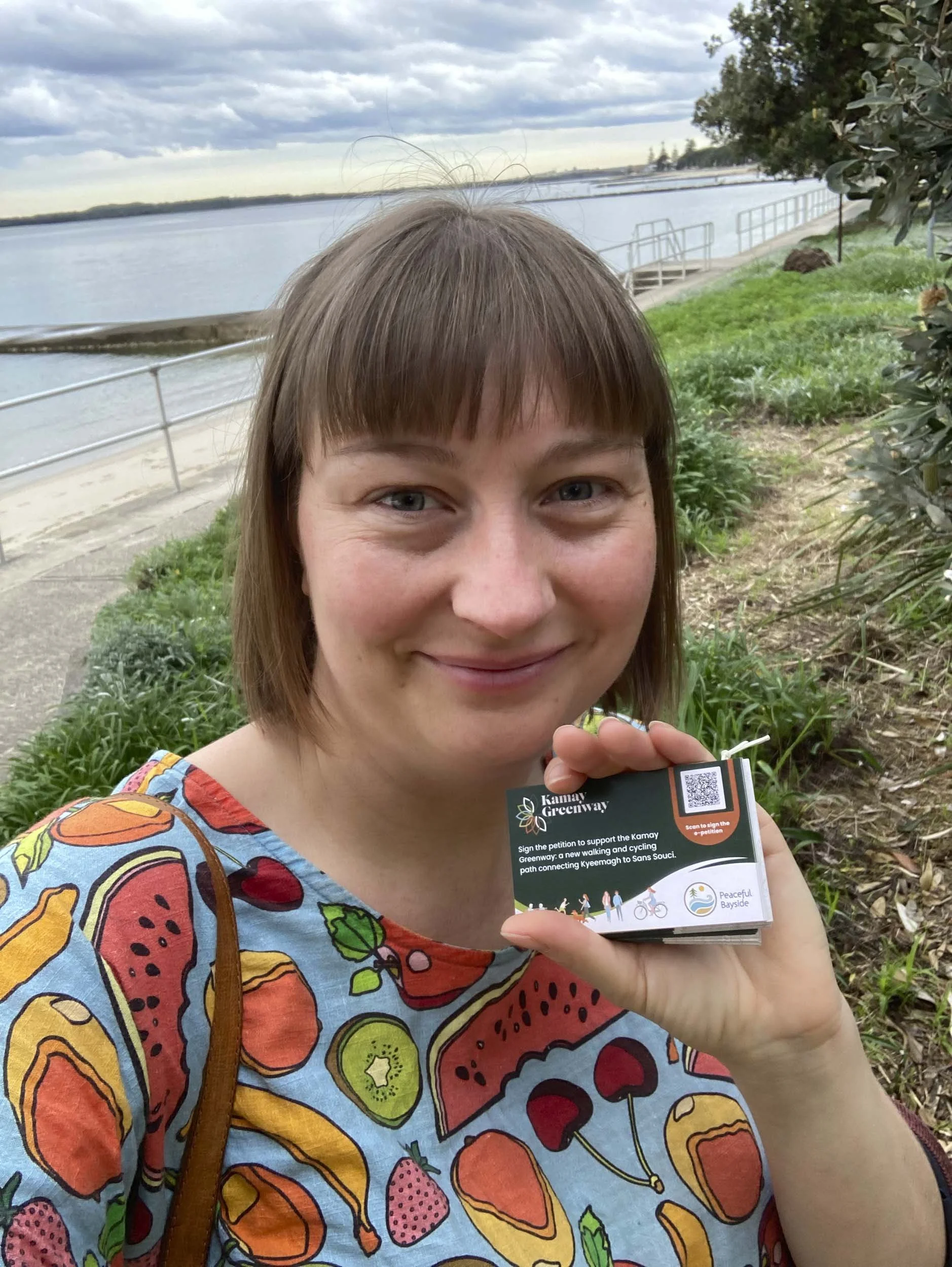
By following Deputy Mayor Heidi Lee Douglas or Councillor Janin Bredehoeft on social media you can keep an eye on our progress and add your comments and ideas to upcoming ‘hot topics’ at Council. You can also follow one of our other pages like Peaceful Bayside, Peaceful Bayside Action Group, Kamay Greenway, Creative Bayside and Big Trucks Off Bexley.

● CONTACT
Join the conversation
If you would like more information about our group, have a media enquiry or want to ask a general question, please fill out this Contact Us form.
If you would like to support us by donating your time visit the volunteer page.
Issues, questions and ideas for Heidi (Ward 5)?
To send us ideas or report on-the-ground issues across Ward 5 (Kyeemagh, Brighton Le Sands, Monterey, Ramsgate, Sandringham, Dolls Point), please email heidilee.douglas@bayside.nsw.gov.au
Issues, questions and ideas for Janin (Ward 3)?
To send us ideas or report on-the-ground issues across Ward 3 (Rockdale, Arncliffe, Banksia, Bexley), please email janin.bredehoeft@bayside.nsw.gov.au